Light or Dark Metal Roofing for Wellington Homes
Choosing a Finish Without Guesswork
Home / Roofing Guides and Projects / Light or Dark Metal Roofing: What Should Wellington Homeowners Consider?


By the Metal Roofing Solutions team
Published 2 September 2026 · Metal-roof colour guide
choose a metal-roof colour only after checking the product is suitable for the property’s exposure and the finish works with the home, roof shape and surroundings. Colour matters, but the metal, coating, fasteners, flashings and warranty conditions matter more.
Photographs are useful for narrowing preferences. They are not a reliable way to identify an exact colour because cameras, screens, weather and changing daylight all alter appearance.
Wellington includes sheltered valleys, elevated hillsides, harbour-facing properties and exposed coastal sites. Marine influence, prevailing wind and areas sheltered from rain can affect the suitable product and maintenance requirements.
The NZMRM environmental-category guidance explains that material and coating selection should respond to the actual environment. Establish the suitable product range first; choose the colour within that range second.
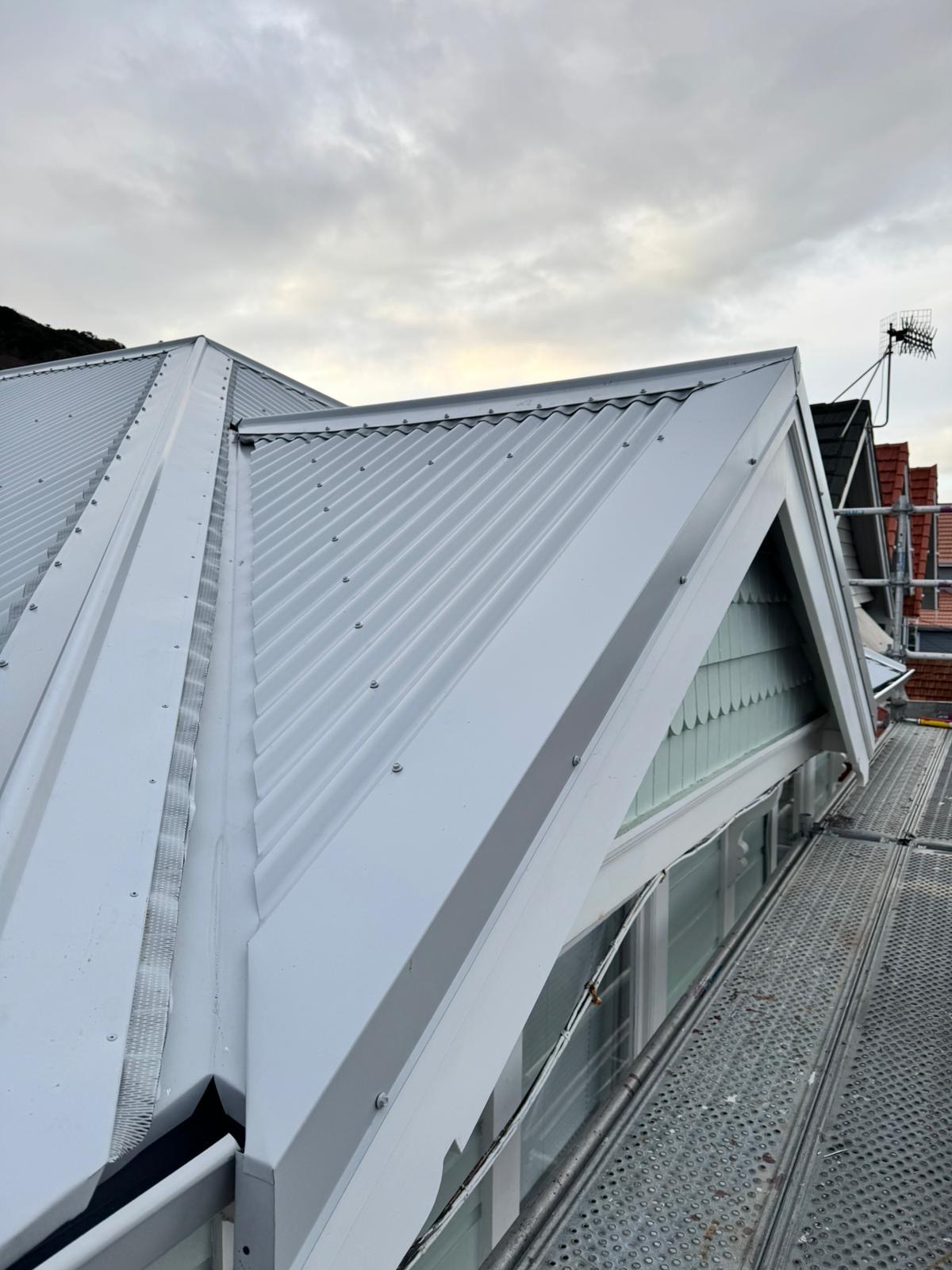
On the photographed home, the light roof keeps the broad roof planes visually quiet and allows the gable shape and pale exterior details to read together. Dirt, organic growth and environmental deposits may appear differently on a pale finish than they do on a darker one.
This photograph does not identify a brand or named colour, and we would not select a product by matching a website image. Current physical samples and the supplier’s technical information are better decision tools.
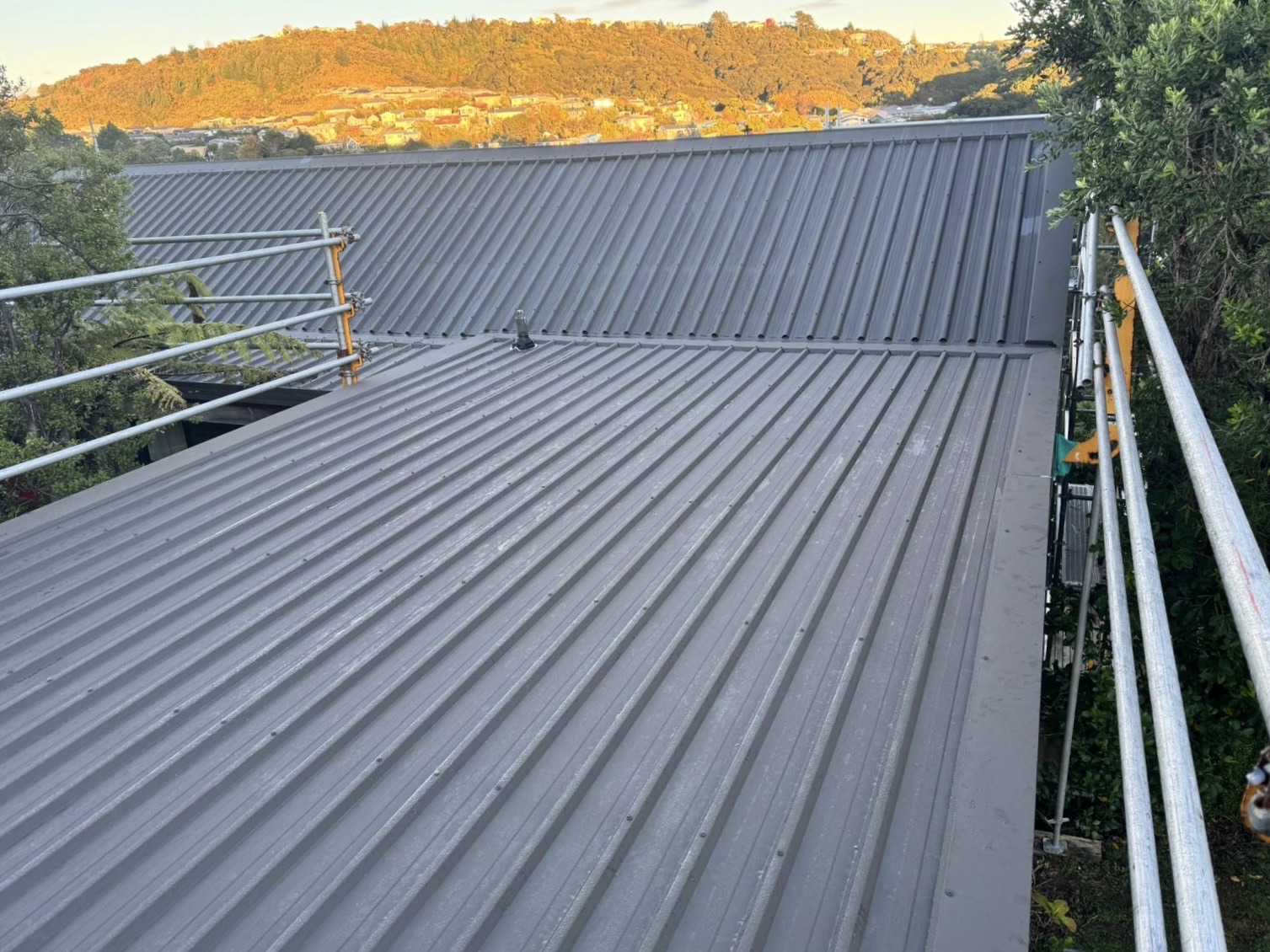
A dark finish can create a strong outline and sit comfortably with dark joinery, cladding or contemporary additions. On a large or highly visible roof, it can also become a major part of the home’s overall exterior palette.
If surface temperature or indoor comfort is important to the decision, ask for relevant product data and consider the entire roof assembly, including insulation and ventilation. Avoid assuming that colour alone will produce a specific energy result for a particular house.
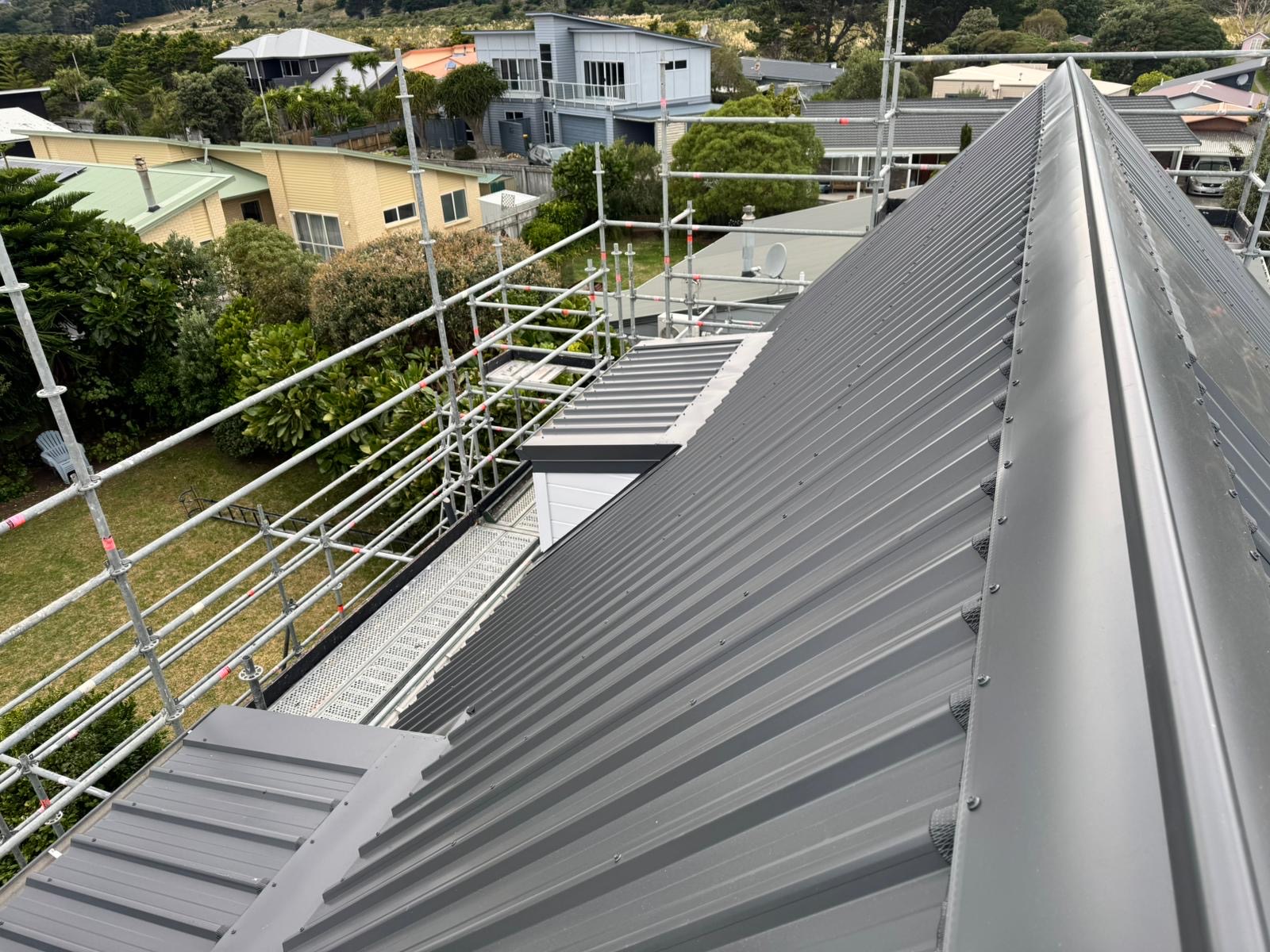
A low-pitched roof may be barely visible from the street, while a steep or hillside roof can dominate the elevation. Look at the property from the places it is normally seen: the street, driveway, garden and neighbouring public viewpoints.
Ridges, valleys and lower additions can also break the colour into several planes. A sample viewed flat in the hand will not look exactly the same when installed on a sloping roof under open sky.
Consider gutters, downpipes, fascia, barge flashings, wall cladding, windows, masonry and timber colours. They do not all have to match, but the relationships should be intentional. Confirm which components are included in the roofing quote and which will remain in their existing finish.
Planning a future exterior repaint can also influence the choice. A roof typically stays in place through several wall-paint cycles, so avoid relying only on a short-lived colour trend.
Supplier maintenance instructions may require washing in sheltered or unwashed areas where salts and contaminants can collect. Eaves, wall cladding under overhangs and sections protected by nearby buildings or vegetation deserve attention.
The NZMRM durability guidance discusses environmental exposure, material compatibility and maintenance. Follow the selected product supplier’s current requirements for the address.
Not reliably. Screen settings, lighting, camera processing, weathering and distance can all change how a colour appears.
Colour alone does not establish coastal suitability. The base metal, coating system, accessories, site exposure, warranty and maintenance requirements need to be checked.
Yes, subject to product availability and a coordinated design. The quote should identify each finish so there is no ambiguity when materials are ordered.
Send us the property address and exterior photographs, along with any colours or materials you plan to retain. We can discuss suitable next steps and make the final product specification clear in the quotation.
View our light-coloured roof case study or Wellington metal roofing service.
Request a roofing quote or call 022 155 3184.